|
In celebration of March - Women’s History Month, Chancellor Loren
Crabtree and the Commission for Women hosted an exciting and energizing
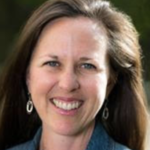
workshop conducted by Dr. Alicia Cook, Professor of Human Development
and Family Studies at Colorado State University. Dr. Cook is an expert
on the creation and implementation of mentoring circles. Mentoring circles
are cohesive, yet diverse cohorts of people who share experiences and
mutual support for recognizing and overcoming obstacles in the pursuit
of professional growth and personal success. The UT Commission for Women
has a long-standing interest in the development and promotion of mentoring
for faculty, staff and students. Dr. Cook presented an enlightened view
of the dynamics and benefits of mentoring circles, drawing on her personal
experiences with mentoring circles at Colorado State. The following information
is based on Dr. Cook’s workshop presentation.
Mentoring Circles
Dr. Alicia Cook
Colorado State University

Early mentoring models focused on the one-on-one learning approach to
transfer skills and knowledge. This process was a non-dynamic and linear,
and focused on coaching (task centered) and counseling (problem oriented).
The linear quality was quite limiting, and presented narrowly defined
options ill suited for complex and robust communities. Universities are
a unique environment composed of diverse groups of people with varied
roles, responsibilities, and expectations. Most of the research and documentation
on mentoring has been written and designed for the corporate sector, and
may not pertain to an academic setting.
The Colorado State Experience
The CSU mentoring program resulted from an accreditation site visit.
The visit highlighted the need for a more formal model of support for
women faculty, staff, and students, so the CSU Institute for Women and
Leadership was established. The director was a well-known and well-respected
leader on campus. Her reputation and influence brought the support of
other high-ranking CSU citizens who helped her implement two leadership
mentoring circles. The circles utilized the mentoring model created by
the WOW’m Mentoring Company.
[1] The founding circles were so successful that six additional circles
were eventually established.
The purpose of the mentoring circles was to promote leadership among
women who wanted to effect change and encourage professional development.
The circles consisted of a mentor, a facilitator, and nine or ten participants
who had been nominated for inclusion (nomination was considered an honor).
The mentor provided expertise and experience. The facilitator was an “outsider”
who maintained the focus of the group, promoted discussion, and fielded
complaints. Mentoring activities were embraced by all circle members.
Two orientation sessions and twelve two-hour meetings were held throughout
the year. Ground rules were established in the orientation sessions. Discussions
occurred in a safe and secure environment, and absolute confidentiality
was a must. Different perspectives and concrete alternative solutions
were presented, increasing the problem solving abilities of circle participants.
Most importantly, participants received support and encouragement for
managing and overcoming obstacles preventing success.
Mentoring at UT
Dr. Cook offered numerous thought-provoking suggestions for UT’s
mentors and mentees:
1. Look for a more creative approach to mentoring that focuses on possibility-centered
options.
2. Gain new insight as both a mentor and a mentee and learn to view abilities
in different ways.
3. Build lasting relationships through mentoring circles. Personal chemistry
within circles is important.
4. Learn from the struggles and failures of others. Mentoring circle participants
gain hope and understanding.
5. Acquire insight through the experiences of others. Mentoring circles
provide options that might not be readily available outside the circles.
In addition, Dr. Cook offered the following suggestions for mentoring
program developers:
1. Have a clear purpose and well-defined expectations.
2. Provide a facilitative structure.
3. Respect diverse backgrounds and needs.
4. Build relationships. Mentoring circles are based on connections. Use
common experiences to bond.
5. Infuse participants with energy and commitment.
6. Generate wide-spread institutional support for mentoring circles.
7. Engage in ongoing evaluation.
According to Dr. Cook, it is important to constantly assess mentoring
programs. Evaluators should concentrate on what is possible to accomplish,
and must realize that limitations do exist. Successful mentoring programs
do not have to continue indefinitely; in fact, the Colorado State mentoring
circles no longer exist. Assessment can be conducted in several ways:
assessment tools are available which evaluate individual growth; both
personal and institutional growth can be measured by the recruitment and
retention of women in male-dominated disciplines; and the retention of
women in key leadership positions can be measured.
Dr. Cook suggested several key questions to ask during assessment of
mentoring programs:
1. Did the nomination process occur in such a way that it was perceived
to be exclusionary?
2. Were the needs of the diverse participants met?
3. Was there a systematic evaluation of the impact of the mentoring circle?
4. What were the long-term effects of the mentoring program?
The following reading list was developed by Dr. Cook: Mentoring
in Higher Education: Advancing Individuals and Institutions.
Dr. Alicia Cook’s workshop engendered great enthusiasm among attendees
for mentoring and mentoring circles. Her personal charisma, expertise,
and vision were infectious, and we on the Commission for Women plan to
develop more and better mentoring opportunities in the near future.
__________________________________________
1. http://mentoringcircles.com.
May 24, 2004
|